

The Big Five Personality Traits are a widely recognized framework in psychology that helps us understand different aspects of human personality. These five traits are:
- Openness – How creative and open-minded a person is.
- Conscientiousness – How organized, responsible, and goal-oriented someone is.
- Extraversion – How outgoing, energetic, and sociable a person is.
- Agreeableness – How friendly, cooperative, and compassionate someone is.
- Neuroticism – How much a person experiences negative emotions like stress, anxiety, and mood swings.
Understanding these traits is important because they can help predict how people behave in different situations, including in the workplace.
For example, someone with high conscientiousness may be very reliable and organized in their work, while someone high in neuroticism may struggle with stress in a busy work environment. By recognizing these traits, employers can better understand their employees, predict their behavior, and create environments that help everyone thrive.
Understanding the Big Five Personality Traits
What Are the Big Five Traits?
The Big Five Personality Traits are five broad characteristics that help to describe how people think, feel, and behave. These traits are:
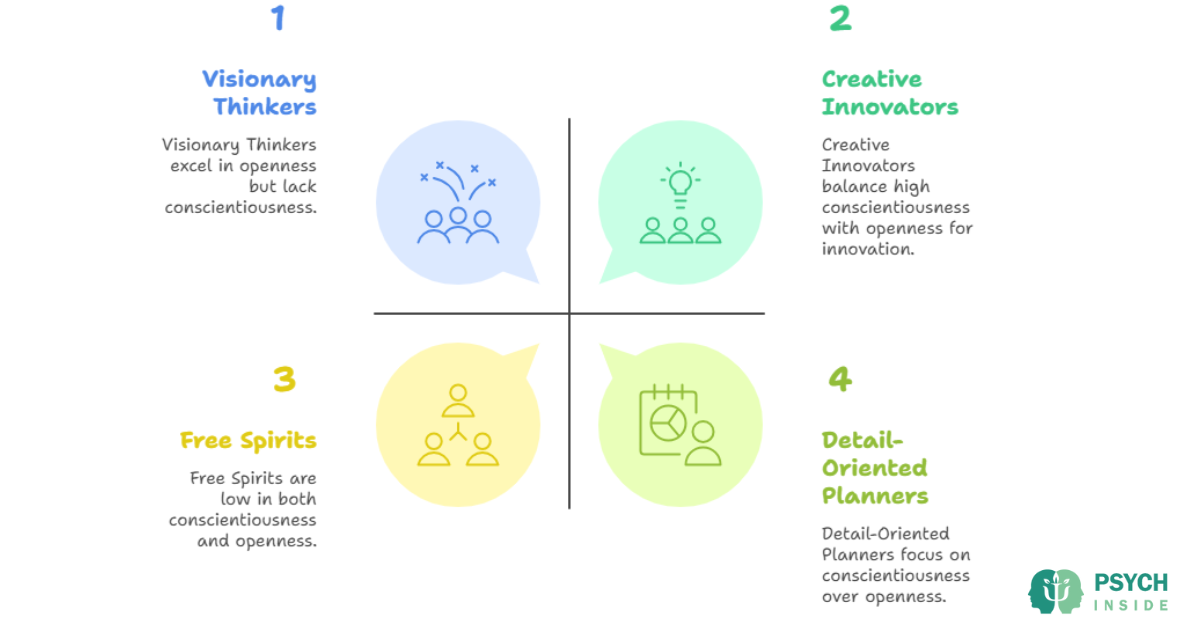
- Openness to Experience: This trait refers to a person’s creativity, curiosity, and willingness to try new things. People who score high in openness are usually imaginative, adventurous, and open-minded.
- Conscientiousness: This trait describes how organized, responsible, and reliable someone is. People high in conscientiousness are often careful, detail-oriented, and good at managing their time and tasks.
- Extraversion: This trait focuses on a person’s sociability, energy, and assertiveness. Extraverted people are outgoing, talkative, and enjoy being around others. They tend to feel energized in social situations.
- Agreeableness: This trait is about how friendly, empathetic, and cooperative a person is. People who score high in agreeableness are typically kind, considerate, and good at working with others.
- Neuroticism: This trait refers to emotional stability. People high in neuroticism often experience stress, anxiety, and mood swings, while those low in neuroticism tend to stay calm and balanced in difficult situations.
Why These Traits Matter in the Workplace
The Big Five traits are important in the workplace because they influence many aspects of how people work and interact with others. Here’s how they matter:
- Influence on Work Habits, Communication, and Relationships: These traits can affect how individuals approach their work tasks, communicate with colleagues, and build relationships. For example, someone high in conscientiousness may be very organized and dependable, while someone high in agreeableness may be excellent at teamwork and collaboration.
- Contribution to Job Performance, Job Satisfaction, and Team Dynamics: The Big Five traits can help predict job performance and satisfaction. For example, employees who are high in conscientiousness are often more productive, while those with high extraversion might excel in roles that require interaction with others. Understanding these traits also helps teams work better together, as people with different traits bring unique strengths to the table.
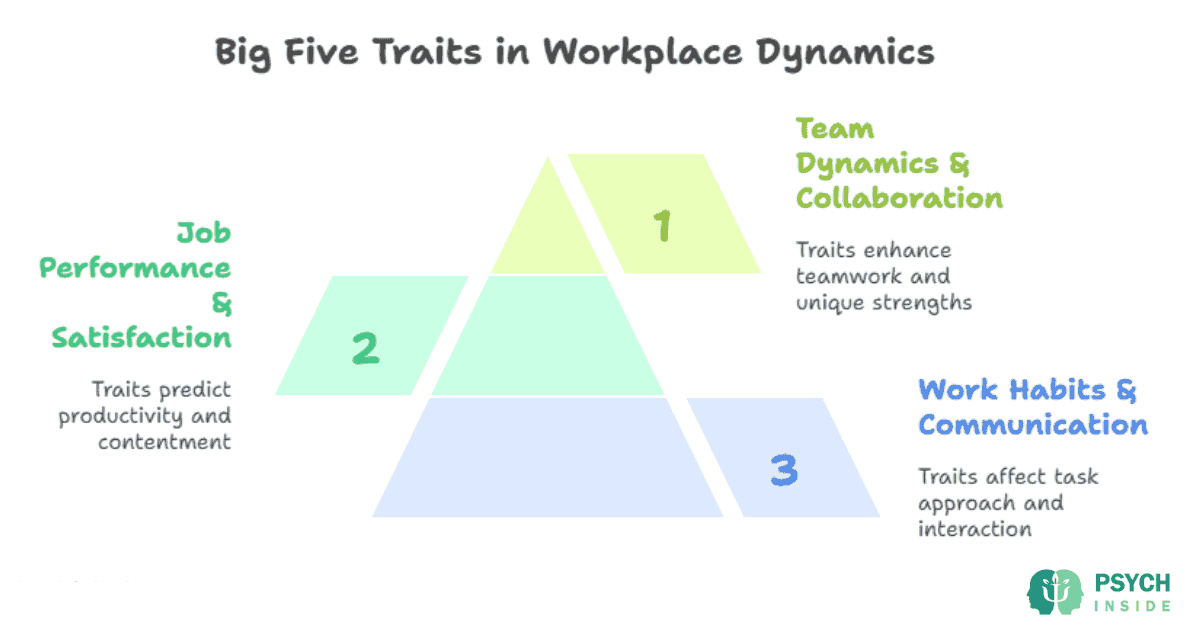
Understanding the Big Five Personality Traits can help employers and employees understand one another better, improve communication, and create a more productive and positive work environment.
How Each Trait Predicts Workplace Behavior
Openness to Experience
- High Openness
People with high openness are creative, innovative, and adaptable to change. They enjoy new ideas and experiences, making them great in roles that require problem-solving and thinking outside the box. For example, they may thrive in roles like product development, research, or marketing, where fresh ideas are important. - Low Openness
Those with low openness prefer routine and are less comfortable with change. They typically prefer familiar methods and might struggle to adapt to new processes or systems. These individuals do well in structured, predictable environments, such as roles that involve data entry, maintenance, or operations where consistency is key.
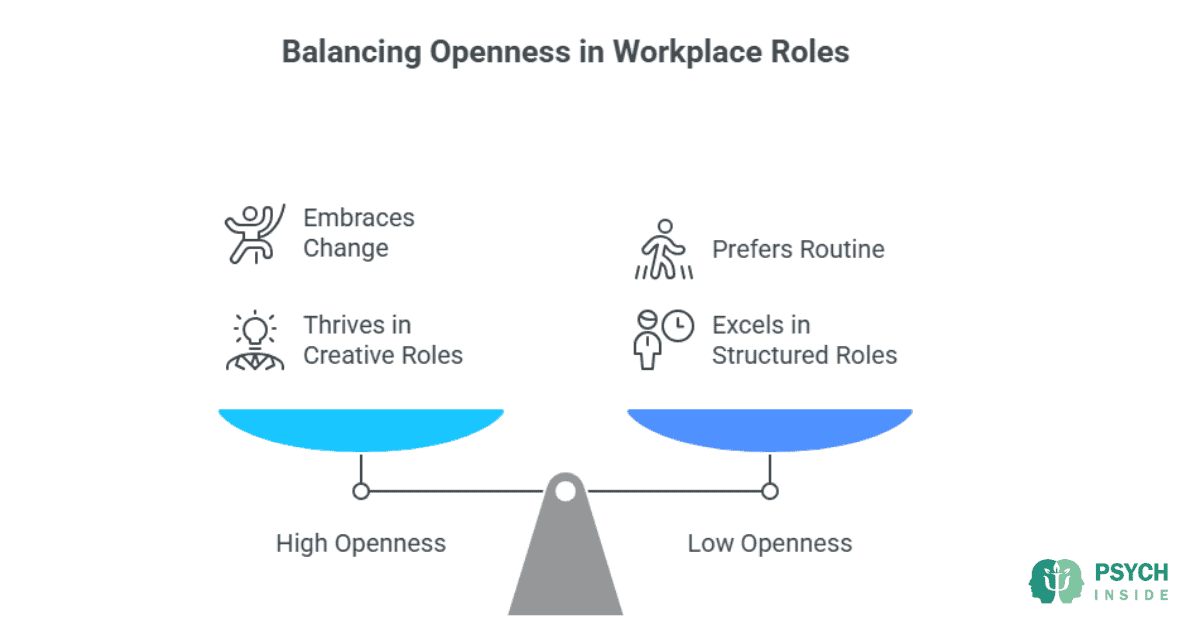
A study by Judge & Bono (2001) found that high openness is associated with greater creativity and adaptability at work.
Conscientiousness
- High Conscientiousness
Individuals with high conscientiousness are dependable, punctual, and organized. They have a strong work ethic, and they excel in roles that require attention to detail and meeting deadlines. Their ability to plan and focus makes them ideal candidates for roles in project management, accounting, or quality control. - Low Conscientiousness
People with low conscientiousness may struggle with procrastination, disorganization, and missed deadlines. They may find it challenging to perform in highly structured environments where attention to detail is critical, such as in administrative or managerial roles.
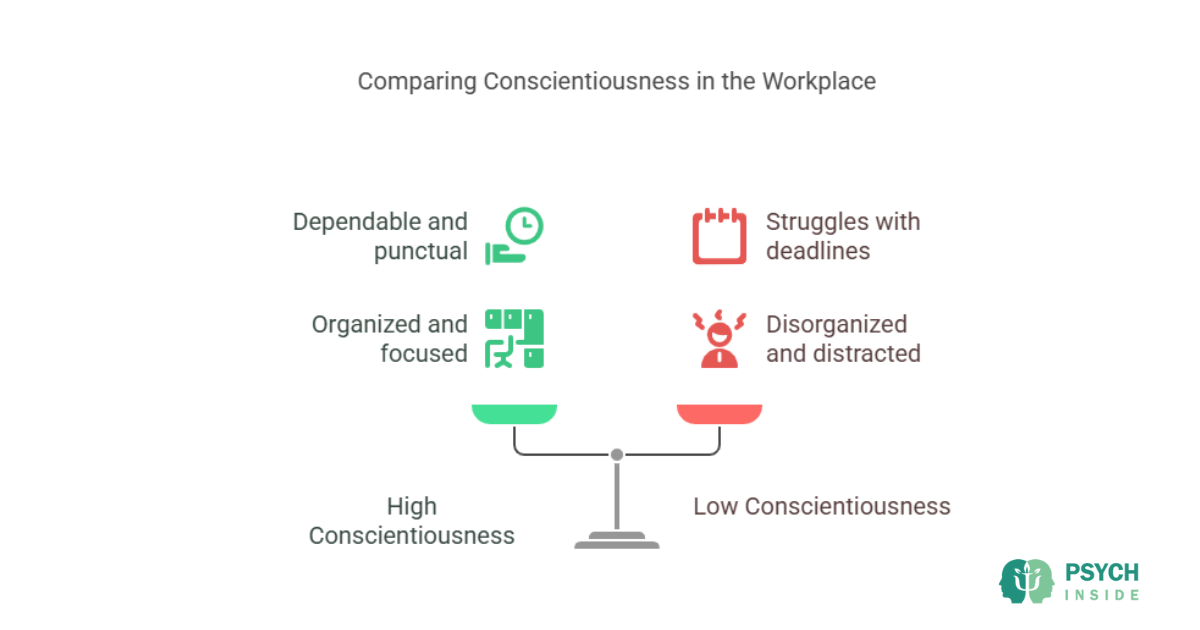
According to a meta-analysis by Barrick & Mount (1991), conscientiousness is a strong predictor of job performance and success in most occupations.
Extraversion
- High Extraversion
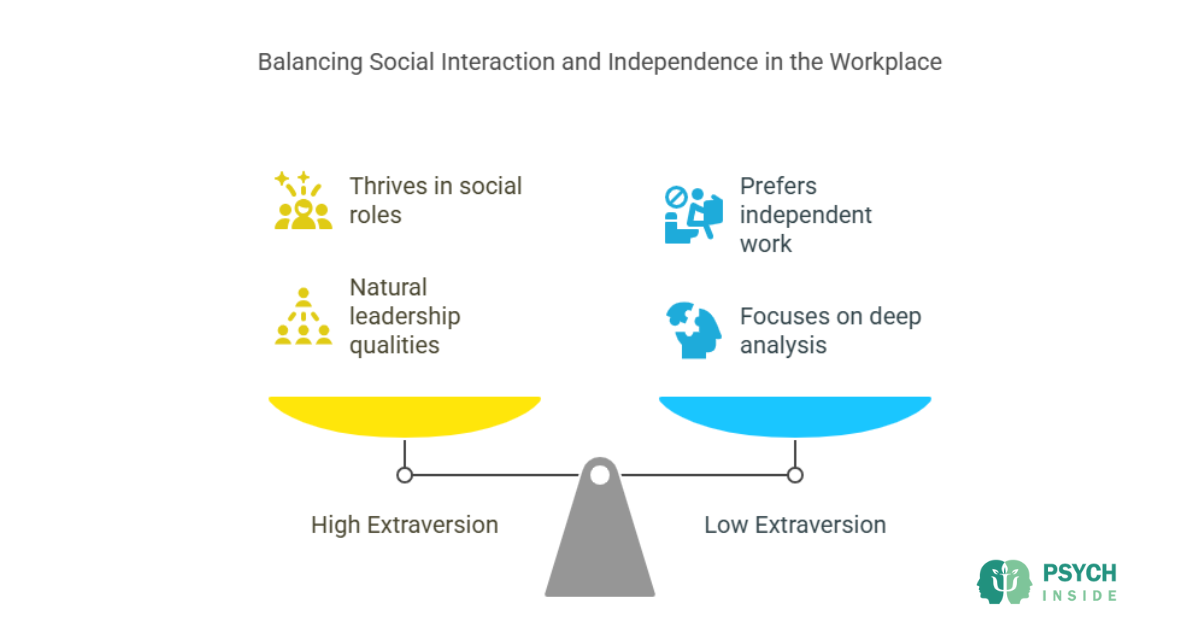
Extraverted individuals are sociable, energetic, and natural leaders. They perform well in customer-facing roles, sales, or leadership positions where interacting with others is key. They thrive in dynamic, team-oriented environments where their energy and enthusiasm inspire others. - Low Extraversion (Introversion)
Introverts are more comfortable working independently. They tend to focus deeply on tasks and enjoy minimal social interaction. Roles that require concentration, analysis, and problem-solving—such as research, writing, or technical positions—are well-suited for introverts.
Agreeableness
- High Agreeableness
People with high agreeableness are cooperative, empathetic, and excel in conflict resolution. They are effective in team-oriented roles, customer service, and managing interpersonal relations. These individuals help build strong relationships and harmony within the team, making them great in human resources or team management positions. - Low Agreeableness
Those with low agreeableness can be competitive and assertive. They might not be as cooperative, which could cause tension in team settings. However, they may be highly driven and excel in individual-focused roles that require a high level of independence and goal orientation.

Neuroticism
- High Neuroticism
Individuals with high neuroticism may experience stress, anxiety, and emotional instability in challenging situations. This can make them less suited for high-pressure or emotionally demanding roles, such as leadership or client-facing positions. They may struggle to remain calm during stressful times. - Low Neuroticism
People with low neuroticism are emotionally stable, calm under pressure, and resilient in difficult situations. These qualities make them well-suited for roles in high-stress environments, such as emergency services, management, or leadership positions where keeping a cool head is crucial.
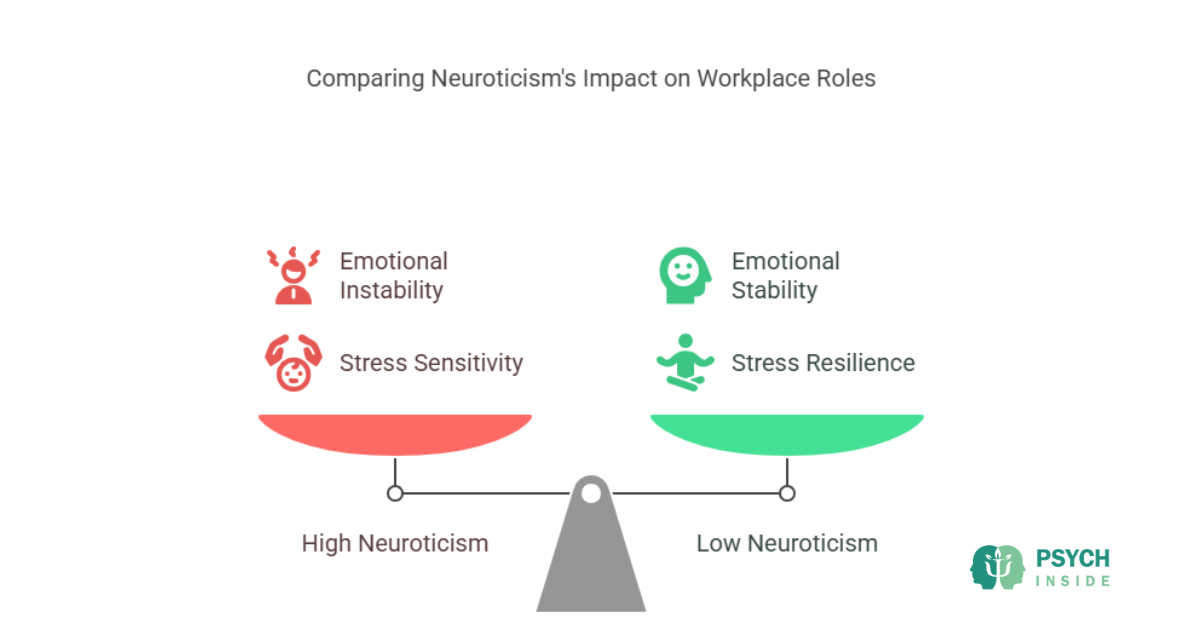
A study titled “Who Chokes Under Pressure? The Big Five Personality Traits and Decision-Making under Pressure” examined how the Big Five personality traits, including neuroticism, influence performance under pressure. The study found that neuroticism negatively predicted performance under both social pressure and combined social and time pressure conditions. Specifically, individuals high in neuroticism performed worse under pressure
Tailoring Hiring Practices
- Using Personality Tests for Hiring: Companies can use personality tests to find candidates who match the job. For example, if a job requires someone detail-oriented and organized, a candidate with high conscientiousness may be a good fit.
- Matching Traits with Job Responsibilities: Different jobs need different personality traits. For example, jobs requiring creativity might benefit from people with high openness, while roles needing structure and reliability may suit those with high conscientiousness.
Building Effective Teams
- Pairing Different Personality Types: Teams can be stronger if they mix different personality types. For example, pairing people who are very organized (high conscientiousness) with creative thinkers (high openness) can help balance productivity and innovation.
- Diverse and Complementary Teams: By creating teams that mix a variety of personality traits, you ensure that each person’s strengths support the others, making the team more effective and well-rounded.
Managing Workplace Stress
- Recognizing Neuroticism: Some employees may be more sensitive to stress (high neuroticism). Recognizing this allows managers to provide extra support, such as offering help or stress-relief programs.
- Helping Employees Build Resilience: Offering training or development programs that help employees manage their emotions can reduce stress and help them stay calm under pressure.
Fostering a Positive Work Environment
- Accommodating Different Personalities: Creating a workplace culture that supports all types of personalities (introverts and extroverts, for example) helps everyone feel valued and comfortable.
- Encouraging Open Communication: Encouraging employees to communicate openly and promoting team-building activities helps strengthen relationships and improve teamwork.
Example 1: High Conscientiousness and Project Management
- What Happened: A person with high conscientiousness (very organized, responsible, and detail-oriented) took on a project management role. They were very careful about planning every step, meeting deadlines, and keeping everything on track.
- Result: Because of their attention to detail and reliable nature, the project was completed successfully, on time, and with high-quality results. Their conscientiousness helped them manage all the tasks and people involved in the project effectively.
Example 2: The Impact of Extraversion on Sales or Leadership
- What Happened: An employee who scored high in extraversion (outgoing, social, and energetic) worked in sales. Their enthusiasm and ability to connect with people helped them easily build relationships with customers.
- Result: Their ability to communicate well and stay positive under pressure led to higher sales and greater leadership effectiveness. Their energy and social skills made them a great team leader, motivating others and creating a fun, productive environment.
Example 3: High Neuroticism in a High-Pressure Role
- What Happened: An employee with high neuroticism (someone who tends to be anxious and easily stressed) worked in a high-pressure role, where quick decision-making was needed. This employee struggled with stress, often feeling overwhelmed and making mistakes under pressure.
- How it Was Addressed: The company recognized the employee’s stress levels and offered support, such as stress management training or more regular check-ins. With help, the employee learned to manage their emotions better and was able to improve their performance, becoming more confident and focused under pressure.
- Employers should consider personality traits when making decisions about hiring and forming teams. By doing so, they can ensure they select candidates who are a good fit for the role and the company culture. For example, hiring someone with high openness might be ideal for a role that requires innovation, while high agreeableness might be valuable in customer service positions.
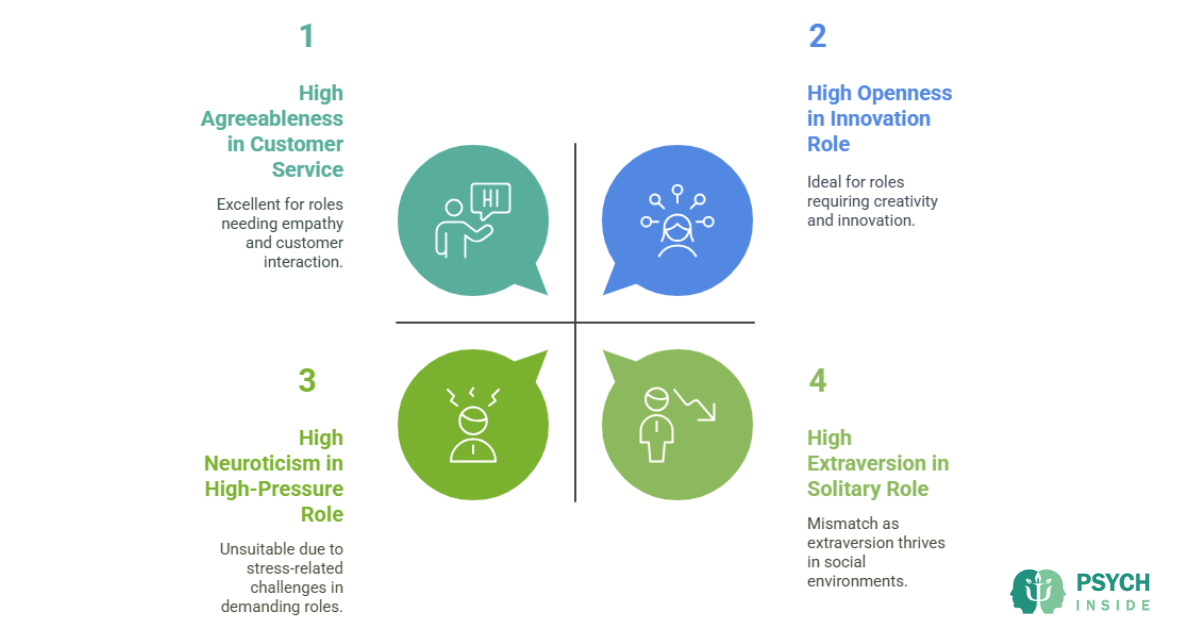
When forming teams, it’s important to mix different personality traits to create a well-balanced group. A diverse team can bring in multiple perspectives and skills, leading to more creative solutions and better overall performance. By considering the Big Five traits, employers can build more effective teams, improve job satisfaction, and increase productivity.
Understanding and leveraging personality traits in the workplace is a powerful way to enhance both individual and team performance, ultimately leading to a more successful and harmonious work environment.