
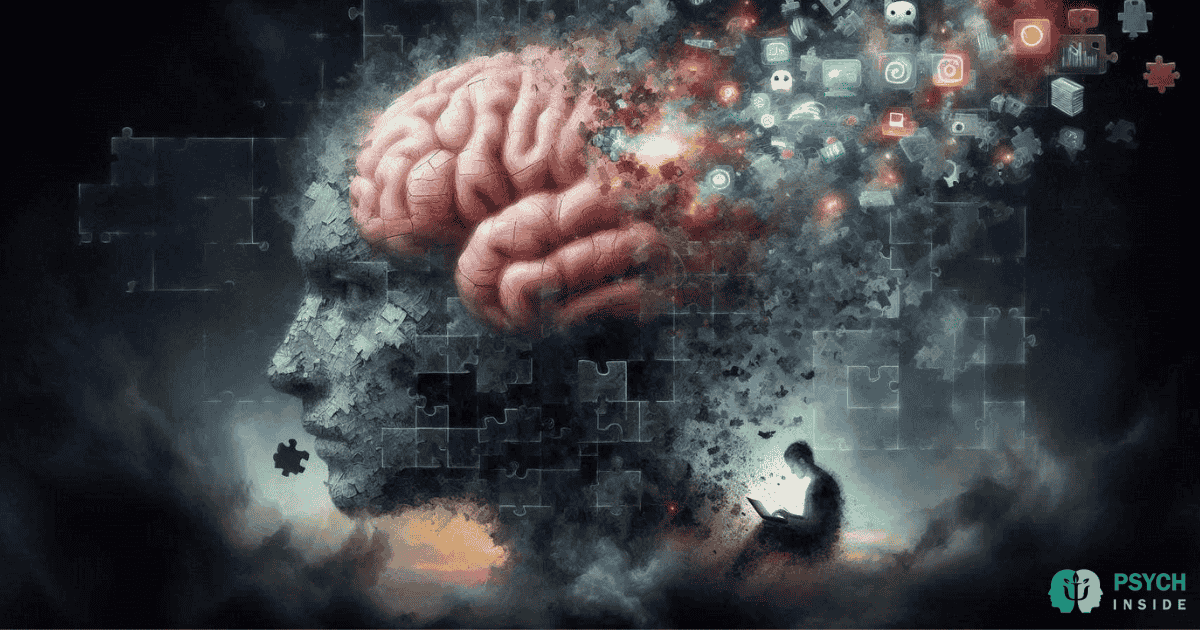
Recent research explores “brain rot” as a term describing mental fatigue or cognitive overload caused by excessive consumption of digital media, particularly social platforms like TikTok, YouTube, and Instagram.
In 2024, Oxford University declares “Brain Rot” as the Word of the Year
People use the term ‘brain rot’ in two ways.
- First, it refers to the bad, unimportant stuff we find online, like useless videos or fake news. This kind of content isn’t helpful or meaningful.
- Second, ‘brain rot’ describes how these things can make us feel or act. When we spend too much time with this kind of content, it can have a negative effect on us and even on how our society behaves.”
The word ‘brain rot’ has become more important lately, especially in the last year. It first became popular on social media sites like TikTok, mostly used by young people.
The Psychology of Brain rot
Psychologically, brain rot is the result of overstimulating the brain’s reward system, causing dependence on instant gratification. This leads to long-term changes in neural pathways, cognitive functions, and emotional regulation, making it harder to break free from the cycle.
The Brain’s Reward System: Hooked on Stimulation
The key driver of brain rot is the brain’s reward system, particularly the role of dopamine, a neurotransmitter that regulates feelings of pleasure and motivation. Engaging in activities like scrolling social media, binge-watching, or gaming provides small bursts of dopamine, creating a feedback loop that reinforces the behavior.
Research Insight
A study published in Behavioral Neuroscience (2018) found that excessive exposure to dopamine-inducing activities, such as gaming or social media use, desensitizes the brain’s reward pathways. This means that individuals need increasing amounts of stimulation to feel the same level of satisfaction, leading to compulsive behavior and difficulty finding pleasure in offline activities.
Real-Life Example
Consider Emily, a teenager who spends hours daily on TikTok. The short, engaging videos constantly trigger dopamine release. Over time, she struggles to enjoy reading books or completing homework, as these activities lack the instant gratification provided by social media.
Cognitive Overload: Too Much Information
Our brains are designed to process a limited amount of information at a time. When we consume excessive content, particularly from multiple sources simultaneously, it overwhelms our cognitive capacity, leading to cognitive overload. This not only reduces focus but also impairs memory retention and problem-solving abilities.
Cognitive Load Theory
According to cognitive load theory (Sweller, 1988), the brain has a finite working memory capacity. When this capacity is exceeded by the influx of digital stimuli, cognitive functions like attention, comprehension, and decision-making deteriorate.
Case Study
Mark, a university student, multitasks by watching YouTube tutorials while checking his email and scrolling Instagram. By the end of the session, he feels mentally drained and struggles to recall the content of the tutorial, a clear sign of cognitive overload.
Emotional Dysregulation and Burnout
Brain rot can have a significant emotional toll, causing symptoms such as anxiety, irritability, and depression.
Constant exposure to social media often exacerbates these feelings through social comparison, where individuals measure their self-worth against the idealized lives portrayed online.
Research Insight
A 2021 study published in Cyberpsychology, Behavior, and Social Networking found that individuals who spent more than three hours daily on social media reported significantly higher levels of anxiety and depressive symptoms compared to those with more balanced media consumption.
The researchers attributed this to the negative impact of curated online personas on self-esteem.
Real-Life Example
Sophia, a 25-year-old graphic designer, spends her evenings scrolling Instagram. Seeing her peers post about promotions and vacations triggers feelings of inadequacy and stress, leading to emotional exhaustion.
Neuroplasticity: Rewiring the Brain
The brain’s ability to adapt and reorganize itself, known as neuroplasticity, plays a crucial role in how brain rot affects mental health.
Repeated exposure to repetitive or superficial digital content rewires neural pathways, making the brain more inclined toward these activities and less capable of engaging in deep thinking or sustained focus.
Research Insight
A groundbreaking study in Nature Communications (2020) found that individuals who spent prolonged periods on short-form content platforms like TikTok showed reduced activity in the prefrontal cortex, the area responsible for executive functions such as decision-making and attention.
Real-Life Example
David, a middle-school student, plays mobile games for hours each day. Over time, his ability to focus in class declines, as his brain becomes conditioned to seek quick rewards rather than engage in long-term problem-solving.
The Impact of Brain Rot on Mental Health
Brain rot manifests in several ways, all of which significantly impair mental well-being:
- Reduced Attention Span: Difficulty concentrating on tasks due to reliance on instant gratification.
- Increased Anxiety and Stress: Stemming from social comparison and the constant pressure to stay digitally engaged.
- Emotional Exhaustion: Resulting from overstimulation and lack of meaningful downtime.
- Cognitive Decline: Impairments in memory, problem-solving, and critical thinking skills.
How to reduce brain rot?
While the impact of brain rot can be profound, it is possible to mitigate its effects with intentional strategies. Here are evidence-based approaches to reclaiming mental clarity and emotional balance:
Practice Mindfulness
Mindfulness techniques such as meditation and deep breathing help reduce stress and increase awareness of digital habits.
Action Step
Set aside 10 minutes daily for mindfulness exercises. Apps like Headspace or Calm can provide guided meditations specifically designed to counteract digital fatigue.
Set Digital Boundaries
Develop tech-free zones and set screen time limits in your daily routine.
Action Step
- Designate specific hours (e.g., during meals or before bed) as no-screen times.
- Use tools like Apple’s Screen Time or Android’s Digital Wellbeing to monitor and control usage.
Diversify Your Activities
Engage in offline hobbies that stimulate different parts of the brain, such as painting, cooking, or gardening.
Action Step
Allocate time each week to a new or existing hobby. The novelty of trying something different can rewire the brain for adaptability and focus.
The impact of brain rot on mental health is a growing concern in the digital age, but understanding its psychological roots offers a pathway to recovery. By addressing the overstimulation of the brain’s reward system, reducing cognitive overload, and prioritizing offline activities, you can break free from the cycle of brain rot.
Remember, small changes in your daily habits can lead to significant improvements in your mental health and overall quality of life.